Marshmallow Tower Challenge Instructions: A Comprehensive Guide
This engaging team-building activity challenges participants to construct the tallest freestanding structure, utilizing spaghetti, tape, string, and a single marshmallow atop.
Teams strategize, prototype, and iterate within a strict time limit, fostering collaboration and problem-solving skills, ultimately testing assumptions about structural engineering.
Detailed instructions and rules ensure a fair and insightful experience, promoting communication and highlighting the importance of rapid prototyping for optimal results.
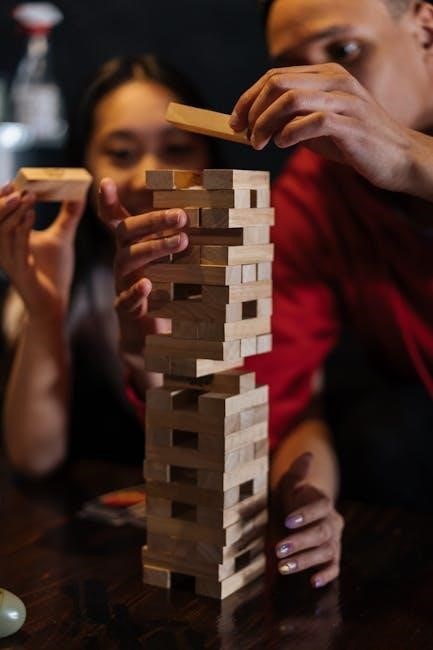
The Marshmallow Tower Challenge is a classic team-building exercise designed to reveal insights into collaboration, innovation, and problem-solving. Originating at the Stanford Design School, this deceptively simple activity tasks teams with constructing the tallest freestanding structure possible, using limited materials: spaghetti, tape, string, and crucially, one marshmallow.
The core objective isn’t simply height, but rather the successful integration of the marshmallow at the very apex of the tower. This seemingly minor detail often proves to be the most significant hurdle, exposing assumptions about structural integrity and design. It’s a powerful demonstration of prototyping and iterative design, where quick experimentation and adaptation are key to success. The challenge is frequently used in educational and corporate settings to foster creativity and teamwork.
The Challenge’s Core Principles
At its heart, the Marshmallow Challenge embodies several key principles. Firstly, it emphasizes the value of prototyping – quickly building and testing ideas rather than extensive planning. Secondly, it highlights the importance of iteration, learning from failures and adapting designs accordingly. Thirdly, the challenge underscores the power of collaboration, as effective teamwork is crucial for success.
Furthermore, it reveals the dangers of overthinking; often, the most successful teams are those that begin building quickly and learn through experimentation. The marshmallow’s placement forces teams to confront the fragility of their structures and prioritize stability. Ultimately, the challenge isn’t about engineering perfection, but about embracing a mindset of learning and adaptation.
Materials Required for the Challenge
Essential supplies include 20 sticks of spaghetti, one yard of tape, one yard of string, one marshmallow, and scissors for a successful tower-building experience.
Spaghetti: Types and Considerations
The foundation of most towers relies heavily on the spaghetti’s structural integrity. Standard, dry spaghetti is the typical choice, offering a balance between flexibility and strength. However, variations exist! Thicker spaghetti strands might seem sturdier, but can be more prone to snapping under stress.
Consider the spaghetti’s condition; broken pieces can be strategically used for bracing, but excessive breakage indicates lower quality. Participants should assess the spaghetti’s straightness – straighter strands contribute to a more stable base. Pre-breaking spaghetti into manageable lengths can save valuable time during the build phase.
Experimentation is key; some teams discover that strategically bending the spaghetti creates stronger joints. Ultimately, the spaghetti’s role is to provide a lightweight yet reasonably strong framework to support the crucial marshmallow.
Marshmallow: Freshness and Size
The marshmallow represents the ultimate challenge – the capstone that tests the tower’s stability. Fresh marshmallows are crucial; stale marshmallows become hard and brittle, increasing the risk of the tower collapsing under their weight. A softer marshmallow conforms slightly, potentially distributing weight more evenly;
Standard-sized marshmallows are generally recommended for consistency across teams. Larger marshmallows present a greater weight challenge, demanding a more robust structure. Conversely, miniature marshmallows might be too light to adequately test the tower’s load-bearing capacity.
Strategic placement is vital; centering the marshmallow is ideal, but slight adjustments can sometimes compensate for structural imbalances. The marshmallow’s sticky texture can also aid in bonding spaghetti strands, though relying solely on this is risky.
Tape and String: Roles and Limitations
Tape and string serve as crucial connectors, supplementing the spaghetti’s inherent fragility. Tape excels at creating rigid joints, ideal for reinforcing key structural points and preventing immediate collapse. However, excessive tape can add unnecessary weight and mask underlying structural weaknesses.
String offers flexibility and can bind spaghetti together, forming triangular supports for increased stability. It’s particularly useful for creating a web-like structure, distributing stress across the tower. However, string lacks the immediate rigidity of tape and requires careful knotting.
Both materials have limitations; they aren’t substitutes for sound structural design. Over-reliance on tape or string indicates a lack of effective spaghetti integration.
Scissors: Safety and Usage
Scissors are provided for precise spaghetti manipulation, enabling teams to create customized lengths and angles for optimal structural integration. However, safety is paramount; participants must exercise extreme caution during usage. Always cut away from the body and fellow team members, maintaining a safe distance.
Supervision is recommended, especially with younger participants. Scissors should only be used for cutting spaghetti – attempting to cut tape or other materials risks damaging the blades.
Proper handling extends scissor lifespan and prevents accidents. Encourage mindful cutting, avoiding forceful or jerky motions. Broken or dull scissors should be reported immediately.
Setting Up the Challenge Environment
Prepare designated workspaces with ample room for building, ensuring clear boundaries for each team. Facilitate collaboration and focus, optimizing the challenge experience.
Establish a visible timer to emphasize the time constraint, adding pressure and encouraging efficient teamwork throughout the marshmallow tower construction.
Team Formation and Size
Optimal team size typically ranges from four to five participants, fostering dynamic interaction and diverse perspectives during the marshmallow tower challenge. Smaller teams may struggle with workload distribution, while larger groups can experience communication inefficiencies.
Encourage diverse skillsets within each team, including planners, builders, and communicators, to maximize problem-solving capabilities. Random team assignments can promote cross-departmental collaboration and break down existing silos.
Clearly define team roles, even informally, to streamline the building process and ensure accountability. A designated spokesperson can facilitate communication with facilitators and other teams, enhancing the overall challenge experience.
Consider the overall number of participants when forming teams, aiming for a balance between individual contribution and collaborative effort.
Workspace Preparation and Boundaries
Each team requires a dedicated, flat workspace, ideally a table approximately 2ft x 2ft, to facilitate construction of their marshmallow tower. Ensure sufficient space between teams to minimize accidental interference and maintain focus.
Clearly define workspace boundaries to prevent teams from encroaching on each other’s areas. This promotes fair play and avoids disputes during the time-constrained challenge. Provide each team with identical material kits placed within their designated space.
Remove potential distractions from the workspace, such as unnecessary clutter or electronic devices, to encourage concentration. A clean and organized environment fosters creativity and efficient problem-solving.
Consider floor protection, as spaghetti breakage can create a mess.
Time Limit: Establishing the Pressure
A strict 18-minute time limit is crucial to the Marshmallow Tower Challenge, replicating real-world constraints and fostering quick decision-making. This pressure encourages teams to prioritize, prototype rapidly, and adapt to unforeseen challenges.
Clearly communicate the time remaining throughout the challenge, using a visible timer or periodic announcements. This keeps teams aware of their progress and encourages efficient use of their time. Consider providing warnings at the 10-minute, 5-minute, and 1-minute marks.
Enforce the time limit rigorously; no extensions will be granted. This ensures fairness and emphasizes the importance of time management. The abrupt end forces teams to finalize their designs and accept the results.
The time constraint is a core element of the learning experience.

Detailed Instructions: Building the Tower
Teams begin with planning and design, then construct a spaghetti structure, carefully integrating the marshmallow on top as the final, critical step for success.
Phase 1: Initial Planning and Design
Before construction begins, dedicate a crucial period to brainstorming and sketching potential tower designs. Teams should discuss structural integrity, base stability, and how to effectively support the marshmallow’s weight.
Consider different shapes – triangles offer inherent strength, while broader bases provide stability. Avoid immediately building; instead, focus on conceptualizing multiple approaches. Quickly sketch at least three distinct designs, outlining the spaghetti framework and marshmallow placement.
Discuss material usage – how much spaghetti and tape will be needed? Prioritize a plan that balances height with structural soundness, recognizing the marshmallow’s unique challenge. This initial phase is vital for setting a strategic foundation for the entire build.
Phase 2: Spaghetti Structure Construction
With a design finalized, begin constructing the spaghetti framework. Focus on creating a stable base, utilizing triangles for enhanced strength and rigidity. Carefully connect spaghetti strands using tape, ensuring secure joints – avoid excessive tape, as it adds weight.
Build upwards gradually, testing the structure’s stability at each stage. Don’t rush this phase; a solid foundation is paramount. Experiment with different connection techniques to optimize strength and minimize material waste. Regularly assess the tower’s balance and make adjustments as needed.
Remember, the structure must be freestanding, so avoid relying on external support. Prioritize a lightweight yet robust framework capable of supporting the marshmallow.
Phase 3: Marshmallow Integration – The Critical Step
As time dwindles, carefully prepare for marshmallow placement – this is often the most challenging part. Gently position the marshmallow atop the spaghetti structure, ensuring it’s centered for balanced weight distribution. Avoid applying excessive force, as this can easily topple the tower.
Observe the structure’s reaction; the marshmallow’s weight will test the framework’s integrity. Make minor adjustments to the spaghetti supports if needed, reinforcing weak points. Remember, the entire marshmallow must be supported by the structure to qualify.
This phase demands precision and a delicate touch – a successful integration signifies a well-engineered tower!

Rules and Regulations
Strict guidelines govern the challenge: the entire marshmallow must rest on top, spaghetti can be broken, and all materials must be utilized effectively.
Time limits are enforced, and structures must be freestanding without external support for a valid, competitive outcome.
The Marshmallow Placement Rule
The culminating step of the Marshmallow Tower Challenge centers around the marshmallow itself, and its placement is governed by a crucial rule. The entire marshmallow must be positioned at the very apex of the structure; It cannot be partially supported by the table or any surrounding objects; it must be solely sustained by the spaghetti and tape construction below.
This rule is paramount because it tests the structural integrity and stability of the tower. Teams often focus intensely on height, neglecting the crucial need for a solid foundation capable of supporting the marshmallow’s weight. A wobbly or unstable tower will inevitably collapse under the added load. Successful teams prioritize a balanced design that can confidently bear the marshmallow’s presence at the top.
Judges will carefully inspect each tower to ensure full compliance with this rule, disqualifying any structure that fails to meet the criteria.
Spaghetti Usage Guidelines
Teams are granted a limited supply of spaghetti, the primary building material for their towers. There are no restrictions on how the spaghetti is used – it can be broken, bent, or connected in any manner deemed suitable by the team. However, strategic usage is key to maximizing structural integrity and achieving significant height.
While breaking spaghetti into smaller pieces can facilitate intricate designs, excessive fragmentation can weaken the overall structure. Teams should carefully consider the trade-off between design complexity and material strength. Utilizing triangles and other geometric shapes is often recommended for enhanced stability.
The spaghetti must be the primary load-bearing component; relying heavily on tape for structural support is discouraged and often leads to failure.
Time Limit Enforcement
A strict 18-minute time limit governs the entire building process, creating a sense of urgency and encouraging rapid decision-making. This constraint mirrors real-world project deadlines and forces teams to prioritize effectively. A clear timer, visible to all participants, is essential for fair enforcement.
The challenge concludes precisely at the time limit, regardless of tower completion status. No additional time is granted for finishing touches or minor adjustments; This reinforces the importance of time management and efficient execution.
Designated judges or facilitators are responsible for announcing time intervals (e.g., 10 minutes remaining, 5 minutes remaining) and signaling the final countdown.
Troubleshooting Common Issues
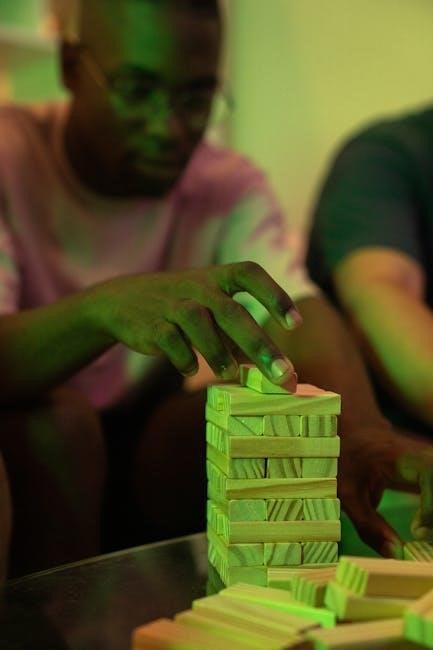
Frequent problems include tower instability, marshmallow support failures, and communication breakdowns within teams. Addressing these quickly is key to learning and improvement.
Encourage iterative design and open communication to overcome these hurdles and enhance the overall challenge experience.
Tower Instability and Collapse
A common issue is tower instability, often stemming from a weak base or uneven weight distribution. Teams frequently build upwards too quickly, neglecting foundational support. Encourage a wider base constructed with interconnected spaghetti triangles for enhanced stability.
Regularly assess the structure during construction, identifying potential weak points before they lead to collapse. Reinforce connections with tape strategically, but avoid excessive use which adds weight. Consider the marshmallow’s weight and ensure the top section can adequately support it.

If a collapse occurs, analyze the failure point – was it a structural weakness, a connection issue, or an imbalance? Use this as a learning opportunity to redesign and rebuild, applying the lessons learned to create a more robust tower.
Marshmallow Support Failures
The marshmallow often proves the biggest challenge, frequently causing towers to topple due to its weight and awkward shape. Avoid placing the marshmallow too high without sufficient support; the higher it is, the more unstable the structure becomes.
Ensure the top of the tower is level and provides a stable platform for the marshmallow. Consider creating a “nest” or cradle of spaghetti to distribute the marshmallow’s weight more evenly. Gentle placement is crucial – avoid dropping or pressing down too hard.
If the marshmallow causes immediate collapse, reassess the entire top section. Reinforce connections and potentially lower the marshmallow’s position for improved stability.
Teamwork and Communication Breakdown
Effective communication is paramount; teams often falter when members work in isolation or fail to share ideas. Encourage active listening and open discussion throughout the challenge. Designate roles – planner, builder, materials manager – to streamline efforts, but maintain flexibility.
Avoid dominant personalities stifling contributions from others. Regularly check in with each team member to ensure everyone feels heard and valued. Constructive feedback is vital; focus on solutions, not blame.
A lack of shared vision can lead to disjointed construction. Clearly define goals and strategies upfront, and revisit them as needed during the build process.
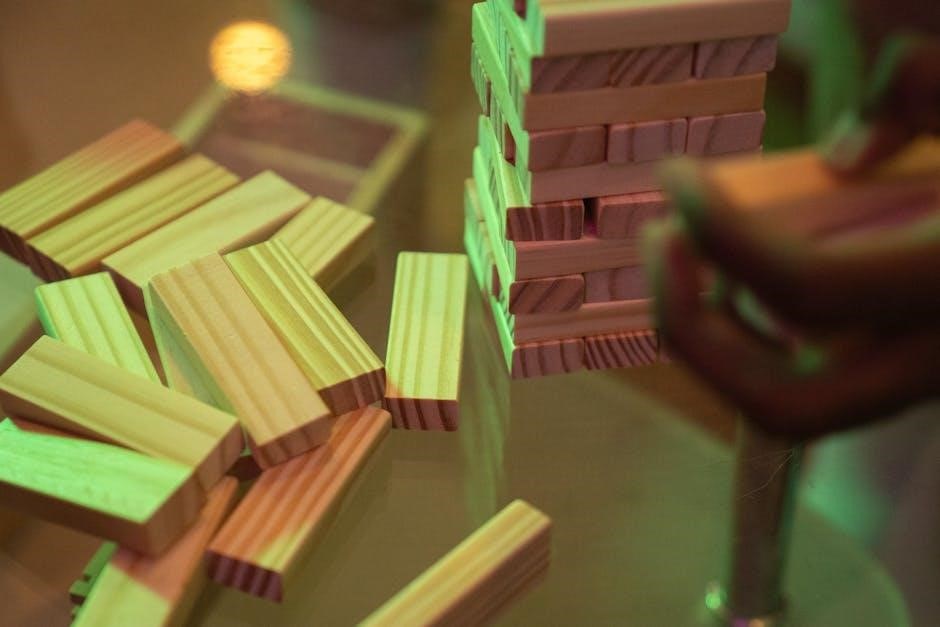
Variations and Advanced Challenges
Elevate the difficulty by adding weight restrictions, introducing unconventional materials, or implementing competitive scoring systems based on height and stability.
These modifications encourage innovative thinking and deeper engagement with the core principles of the Marshmallow Challenge.
Adding Weight Restrictions
Introducing a weight-bearing component significantly increases the complexity of the Marshmallow Tower Challenge, demanding more robust structural designs. Teams must now not only focus on height but also on the tower’s capacity to support additional mass, like small weights or objects.
This variation forces participants to reconsider their initial plans, prioritizing stability and load distribution. Spaghetti structures, often optimized for height, may require reinforcement or a wider base to prevent collapse under pressure. The marshmallow itself becomes a crucial element in weight transfer.
Weight restrictions can be customized based on the skill level of the participants, ranging from a few grams to several ounces. Clearly define the weight placement rules – whether it must be suspended from the marshmallow or supported directly by the structure – to ensure a fair and consistent challenge.
Introducing Different Materials
Expanding the material palette beyond spaghetti, tape, string, and marshmallows injects fresh challenges into the tower-building process. Consider incorporating materials like index cards, paper clips, rubber bands, or even limited amounts of modeling clay.
Each new material presents unique properties – flexibility, strength, adhesion – forcing teams to adapt their designs and construction techniques. Index cards can provide broader support surfaces, while rubber bands offer binding capabilities. Clay can act as a stabilizing agent, but adds weight.
Carefully curate the material selection to maintain a balance between complexity and feasibility. Clearly define any limitations on material usage, such as quantity or permissible modifications, to ensure a level playing field and focused problem-solving.
Competitive Scoring Systems
Beyond simply measuring height, diverse scoring systems can amplify the challenge and emphasize different aspects of team performance. Implement a points-based system factoring in tower height, structural stability (duration of standing), and material efficiency (unused materials).
Consider awarding bonus points for aesthetic design, innovative use of materials, or demonstrated teamwork. A “failure penalty” – deducting points for collapsed towers – adds risk and encourages robust construction.
Clearly communicate the scoring criteria upfront to ensure transparency and strategic decision-making. Utilizing a weighted scoring system allows prioritizing specific skills, like emphasizing stability over sheer height, tailoring the challenge to desired learning outcomes.
The Marshmallow Challenge: Learning Outcomes
This activity cultivates collaboration, rapid prototyping, and iterative design, revealing the value of testing assumptions and adapting strategies for successful problem-solving.
Promoting Collaboration and Communication
The Marshmallow Challenge inherently demands effective teamwork and open communication. Success isn’t solely about individual building skills; it’s about a team’s ability to share ideas, actively listen to each other’s perspectives, and coordinate efforts efficiently.
Teams must discuss initial designs, delegate tasks, and provide constructive feedback throughout the construction process. The time constraint forces quick decision-making, requiring concise and clear communication.
Misunderstandings or a lack of shared vision can quickly lead to structural failures, highlighting the critical role of verbal and non-verbal cues in collaborative problem-solving. Ultimately, the challenge demonstrates how synergistic teamwork surpasses individual capabilities.
Encouraging Prototyping and Iteration
The Marshmallow Challenge actively promotes a prototyping mindset, encouraging teams to build, test, and refine their designs rapidly. Initial grand plans often prove unstable, prompting a shift towards iterative development.
Teams quickly learn that building a single, complex structure is less effective than creating smaller prototypes to test structural integrity and identify weaknesses. This process mirrors real-world engineering practices, where iterative design is crucial for success.
The limited time forces teams to embrace failure as a learning opportunity, adapting their approach based on observed results. This fosters a culture of experimentation and continuous improvement, vital skills in any innovative endeavor.
Highlighting the Importance of Testing Assumptions
The Marshmallow Challenge brilliantly exposes the dangers of relying on untested assumptions. Many teams initially assume a wide base provides stability, only to find it insufficient to support the marshmallow’s weight.
This immediate feedback loop forces participants to question their preconceived notions about structural engineering and material properties. They quickly realize that theoretical knowledge must be validated through practical experimentation.
The challenge underscores that assumptions, while helpful for initial planning, are not substitutes for empirical evidence. Successful teams are those that actively test their ideas, adapt to unexpected results, and prioritize data-driven decision-making throughout the building process.
Leave a Reply