
Manual Actuators: A Comprehensive Overview
Manual actuators offer a simple, reliable, and cost-effective solution for applications needing mechanical motion without electricity, utilizing gears and levers for torque․
Manual actuators represent a foundational technology in mechanical control, offering a direct, human-powered method for operating various systems․ These devices convert manual effort into mechanical motion, bypassing the need for external power sources like electricity or hydraulics․
From simple levers to intricate gear mechanisms, manual actuators are prevalent across diverse industries․ They are particularly valuable in scenarios where automation isn’t essential, or where a reliable, fail-safe operation is paramount․ Their inherent simplicity translates to increased reliability and reduced maintenance requirements․
Understanding their principles and applications is crucial for engineers and technicians alike․
What is a Manual Actuator?
A manual actuator is a mechanical device designed to convert human physical effort into a controlled, mechanical action․ Unlike automated actuators, they don’t rely on electricity, hydraulics, or pneumatics for operation․ Instead, they utilize handwheels, levers, chainwheels, or T-keys to manipulate a valve, door, or other mechanism․
These actuators function by employing gears and mechanical linkages to amplify input torque, enabling the operation of systems requiring significant force․ They are fundamentally about direct mechanical advantage․ Manual valve actuators, for instance, don’t need an external power source․
Core Principles of Operation
Manual actuators operate on the fundamental principle of mechanical advantage․ They convert the relatively small force applied by a human operator into a larger, more powerful force capable of moving a load․ This is achieved through systems like gears, pulleys, and chains, which multiply torque․
The core concept involves utilizing a mechanical linkage – a series of connected components – to transmit and modify motion․ Different actuator types (lever, handwheel, etc․) employ varying linkage designs to optimize force and control․ Essentially, they’re about transforming rotational or linear human input into the desired mechanical output․
Types of Manual Actuators
Various manual actuators exist, including handwheel, lever, chainwheel, T-key, and gear-operated designs, each suited for specific applications and force requirements․
Handwheel Actuators
Handwheel actuators are a prevalent type, employing a rotating wheel to convert manual effort into torque․ These are frequently utilized in valve control, offering a straightforward method for precise operation․ The design leverages mechanical advantage through gearing, amplifying input force․
They excel in applications demanding controlled movements and are often favored where automation isn’t necessary or cost-prohibitive․ Compact and robust, handwheel actuators are suitable for diverse environments․ Their simplicity contributes to high reliability and ease of maintenance, making them a staple in many industrial settings․ They don’t require external power․
Lever Actuators
Lever actuators utilize a mechanical lever arm to translate manual force into a rotational or linear motion․ These are particularly effective when a significant mechanical advantage is needed with minimal effort․ Often found in valve operations, they provide a quick and responsive control method․
The lever’s length dictates the force amplification, allowing operators to manage valves even in high-pressure systems․ Their design is relatively simple, contributing to durability and ease of use․ While requiring physical exertion, lever actuators offer a reliable and cost-effective solution where automated control isn’t essential․
Chainwheel Actuators
Chainwheel actuators employ a chain and wheel mechanism to transmit manual force, offering a versatile solution for remote or difficult-to-reach valve control․ They excel in applications demanding increased mechanical advantage and are often preferred for larger valves requiring substantial operating torque․
The chain allows for flexible positioning of the operating handle, enhancing accessibility․ Like other manual types, they eliminate the need for external power, ensuring reliability and cost-effectiveness․ However, they necessitate physical effort and aren’t suited for rapid or automated operation, providing a robust, manual control option․
T-Key Actuators
T-Key actuators represent a straightforward and economical manual valve control method, utilizing a simple T-shaped key for operation․ These actuators are commonly found in applications where frequent operation isn’t required and a basic, reliable solution is prioritized․
They are particularly well-suited for smaller valves and offer a compact form factor․ While requiring manual effort, T-Key actuators provide a direct and intuitive interface․ They lack the mechanical advantage of chainwheels or handwheels, making them less suitable for high-torque applications, but remain a cost-effective choice․
Gear-Operated Actuators
Gear-operated actuators provide a significant mechanical advantage, enabling manual operation of valves requiring substantial torque․ They employ a series of gears to amplify input force, making it easier to control larger, high-pressure systems․ This design translates manual effort into a higher output torque, overcoming resistance effectively․
Commonly used for shutter doors and various industrial applications, these actuators offer robust and reliable performance․ While potentially more complex than simpler designs, the increased force capacity makes them ideal for demanding tasks where automation isn’t necessary or feasible․
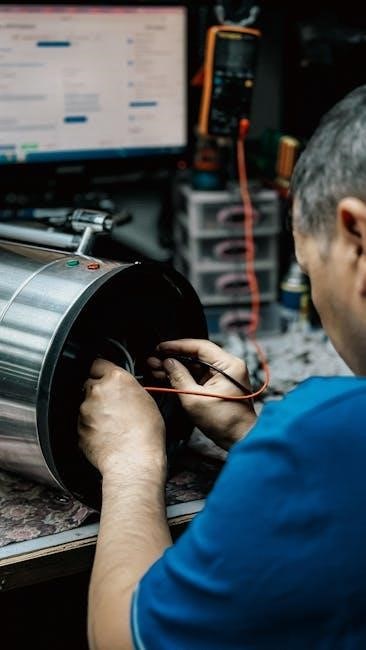
Applications of Manual Actuators
Manual actuators excel in valve control, shutter doors, rack and pinion systems, and industrial machinery, offering direct mechanical control where power isn’t available․
Valve Control Applications
Manual valve actuators are extensively used for controlling fluid flow in various systems, offering a dependable solution where automated operation isn’t necessary or cost-effective․ These actuators, employing handwheels, levers, or T-keys, provide direct mechanical control, enabling precise positioning without requiring an external power source․
They are particularly suitable for applications involving infrequent operation or where manual override is desired․ Operating larger valves can demand significant physical effort, especially in high-pressure scenarios, but the simplicity and reliability of manual control remain advantageous․ This makes them a common choice in many industrial processes and plumbing systems․
Shutter Door Mechanisms
Manual actuators, specifically gear-operated types, are frequently employed in shutter door mechanisms, providing a robust and reliable means of operation․ These systems leverage mechanical advantage through gears to facilitate the lifting and lowering of heavy shutter doors with manageable physical effort․
The design allows for controlled movement, ensuring smooth operation and secure locking․ While requiring manual input, these actuators offer a cost-effective alternative to motorized systems, particularly in situations where power access is limited or unnecessary․ Their simplicity contributes to long-term durability and ease of maintenance, making them a practical choice for various applications․
Rack and Pinion Systems
Manual actuators find significant application within rack and pinion systems, converting rotational motion into linear force․ These systems, often seen in steering mechanisms and linear positioning applications, rely on a gear (pinion) engaging a linear gear set (rack)․
Manual operation provides direct control and eliminates the need for external power, making them suitable for applications demanding precision and simplicity; The mechanical advantage offered by the gear ratio allows for efficient movement of loads, even with limited manual effort․ Their robust construction ensures reliability and longevity in demanding environments․
Industrial Machinery Applications
Manual actuators play a crucial role in various industrial machinery applications where precise, reliable control is paramount, yet automated systems aren’t essential or cost-effective․ They’re frequently utilized for adjusting machine settings, clamping mechanisms, and operating auxiliary equipment․
Their simplicity and lack of reliance on electricity make them ideal for harsh environments or situations where power outages are a concern․ Manual gear-operated systems provide substantial torque for demanding tasks, while lever and handwheel actuators offer finer control for adjustments․ This ensures operational efficiency and safety․

Advantages of Manual Actuators
Manual actuators boast cost-effectiveness, simplicity, and reliability, eliminating the need for external power sources and offering dependable operation in diverse settings․
Cost-Effectiveness
Manual actuators present a significant economic advantage over automated counterparts․ Their design inherently requires fewer components, eliminating the expenses associated with motors, sensors, controllers, and wiring․ This simplicity translates directly into lower initial purchase costs, making them ideal for budget-conscious projects or applications where automation isn’t essential․
Furthermore, the absence of electrical components reduces long-term operational costs․ There are no electricity bills to consider, and maintenance requirements are typically minimal, further contributing to overall savings․ Manual valves, for instance, are often cheaper than automated versions, especially in systems where automation isn’t a necessity․
Simplicity and Reliability
Manual actuators excel in simplicity, boasting straightforward designs with minimal moving parts․ This inherent simplicity directly contributes to exceptional reliability; fewer components mean fewer potential points of failure․ Unlike complex automated systems, manual actuators aren’t susceptible to electronic malfunctions, software glitches, or power outages․
Their mechanical nature ensures consistent performance even in harsh environments or demanding applications․ The robust construction and reliance on direct mechanical linkage provide a dependable solution where uptime is critical․ This makes them a preferred choice for applications requiring long-term, trouble-free operation without the need for frequent maintenance․
No External Power Source Required
Manual actuators operate entirely on human power, eliminating the need for any external electricity, hydraulics, or pneumatics․ This independence from power sources offers significant advantages in remote locations, hazardous environments, or situations where power availability is unreliable․ The absence of electrical components also reduces the risk of sparks or electromagnetic interference․
This self-contained operation simplifies installation and reduces overall system costs by removing the need for wiring, compressors, or hydraulic pumps․ It’s a particularly beneficial feature for applications prioritizing portability, safety, and operational independence from infrastructure limitations․

Disadvantages of Manual Actuators
Manual actuators demand physical effort, offer limited speed and force, and aren’t suitable for remote operation, especially with large valves or frequent use․
Physical Effort Required
Manual actuators inherently necessitate human physical exertion for operation․ Unlike automated systems, they lack a motor or power source to assist in moving valves, doors, or machinery․ Operating larger valves, particularly in high-pressure systems, can be significantly demanding, potentially causing fatigue or strain on the operator․
This reliance on manual force limits their suitability for applications requiring frequent or continuous operation; The amount of effort needed directly correlates with the size and resistance of the controlled mechanism․ Consequently, careful consideration must be given to the operator’s capabilities and the ergonomic design of the actuation system to minimize strain and ensure safe, efficient operation․
Limited Speed and Force
Manual actuators, by their nature, are constrained in both operational speed and the amount of force they can generate․ Compared to electric or pneumatic actuators, the rate at which a valve can be opened or closed is considerably slower, dictated by the operator’s physical capabilities․
Similarly, the force output is limited by human strength and the mechanical advantage provided by the actuator’s design․ This makes them less suitable for applications demanding rapid response times or substantial force to overcome significant resistance․ Automated actuators excel where precision, speed, and high force are paramount․
Not Suitable for Remote Operation
Manual actuators inherently require direct, physical interaction with an operator, rendering them unsuitable for remote control or automated systems․ Unlike their automated counterparts, they cannot be operated from a distance or integrated into a control loop without significant modification․

This limitation restricts their use in scenarios where accessibility is challenging, or continuous, unattended operation is necessary․ Applications demanding remote monitoring and adjustment, or integration with broader automation infrastructure, necessitate the use of motorized or electronically controlled actuators instead․

Manual Actuators vs․ Automated Actuators
Manual actuators contrast with automated versions in control methods, force capabilities, operational speed, and overall cost, impacting application suitability and system complexity․
Comparison of Control Methods
Manual actuators rely entirely on direct human interaction for operation, employing handwheels, levers, or chainwheels to generate motion and control․ This contrasts sharply with automated actuators, which utilize electric motors, pneumatic systems, or hydraulic pressure controlled by signals and programming․
The key difference lies in the control loop: manual systems are open-loop, dependent on operator skill and force, while automated systems are typically closed-loop, offering precise positioning and repeatable actions․ Manual control lacks remote capabilities, demanding physical presence, whereas automated systems can be operated remotely and integrated into larger control networks for streamlined processes and enhanced efficiency․
Force and Speed Differences
Manual actuators, inherently limited by human strength, generally offer lower force output and slower operational speeds compared to their automated counterparts․ While gear ratios can amplify input torque, the ultimate force is constrained by the operator’s physical capacity․ Operating large valves manually, for instance, can be physically demanding, especially in high-pressure scenarios․
Automated actuators, powered by motors or fluids, can generate significantly higher forces and achieve much faster actuation speeds․ This makes them ideal for applications requiring rapid cycling or handling substantial loads․ The speed and force are precisely controllable, offering consistent performance beyond human limitations․
Cost Analysis
Manual actuators generally present a lower initial investment compared to automated systems․ They eliminate the need for power sources, controllers, and complex wiring, reducing both material and installation costs․ Manual valves, for example, are often cheaper when automation isn’t essential․ However, this cost-effectiveness can be offset by long-term considerations․
Automated actuators, while initially more expensive, can reduce labor costs and improve efficiency, potentially offering a better return on investment over time․ Furthermore, the precision and reliability of automated systems can minimize downtime and maintenance expenses, contributing to overall cost savings․

Selecting the Right Manual Actuator
Choosing the ideal manual actuator requires careful consideration of torque, stroke length, the operating environment, and material compatibility for optimal performance․
Considering Torque Requirements
Determining the necessary torque is paramount when selecting a manual actuator․ Manual actuators leverage mechanical advantage – gears, levers, or chainwheels – to amplify input torque․ Applications involving larger valves or substantial resistance demand higher output torque capabilities․
Carefully assess the force needed to overcome the resisting torque of the controlled mechanism․ Underestimation leads to operational difficulty, while overestimation increases cost and size unnecessarily․
Consider the entire operational range; torque requirements may vary throughout the stroke․ Selecting an actuator with a torque rating exceeding the maximum anticipated load ensures reliable and safe operation, preventing strain and potential failure․
Stroke Length and Form Factor
Stroke length, the distance the actuator moves, must align with the application’s requirements․ Insufficient stroke limits functionality, while excessive stroke adds unnecessary bulk․ Consider the physical space available; compact actuators are crucial in confined areas, like micro units fitting tight spaces․
Form factor – the actuator’s shape and size – impacts integration․ Options range from tubular and mini to industrial and telescopic designs․
Evaluate mounting options and ensure compatibility with existing systems․ A well-chosen form factor simplifies installation and maximizes efficiency, contributing to a streamlined and effective overall design․
Operating Environment Factors
Environmental conditions significantly impact manual actuator performance and longevity․ Consider temperature extremes, humidity, and exposure to corrosive substances․ Materials must withstand these challenges to prevent failure and maintain reliability․
Dust and debris can impede operation, necessitating sealed designs or protective covers․ For outdoor applications, UV resistance is crucial to prevent material degradation․
Assess potential shock and vibration levels; robust construction is vital in demanding environments․ Selecting appropriate materials and protective measures ensures consistent, safe, and long-lasting actuator function․
Material Considerations
Material selection is paramount for manual actuator durability and performance․ Common materials include steel, stainless steel, aluminum, and various polymers․ Steel offers high strength but is susceptible to corrosion; stainless steel provides superior corrosion resistance․
Aluminum is lightweight and corrosion-resistant, suitable for less demanding applications․ Polymers are cost-effective and offer damping properties, but have lower strength․
Consider the operating environment – corrosive atmospheres demand stainless steel or specialized coatings․ Load requirements dictate material strength; higher loads necessitate stronger alloys․ Careful material choice ensures longevity and reliability․

Maintenance and Safety
Regular inspections, proper lubrication, and adherence to safety precautions are crucial for reliable manual actuator operation and preventing potential hazards․
Regular Inspection Procedures
Consistent inspection is paramount for maintaining the longevity and safe operation of manual actuators․ Focus on checking for wear and tear on key components like handwheels, levers, chainwheels, and gears․ Examine for any signs of corrosion, especially in harsh environments․
Verify the secure attachment of all parts, ensuring no loosening or damage exists․ Inspect lubrication points and confirm adequate grease or oil levels․ A visual assessment of the actuator’s overall condition will reveal potential issues before they escalate․ Document all inspection findings and schedule repairs promptly to avoid operational failures and ensure continued reliability․
Lubrication Best Practices
Proper lubrication is crucial for smooth operation and extended lifespan of manual actuators․ Utilize a high-quality grease or oil specifically recommended for mechanical components․ Apply lubricant to gears, threads, and pivot points, following the manufacturer’s guidelines for frequency and quantity․
Avoid over-lubrication, as it can attract dirt and debris․ Regularly wipe away excess lubricant and inspect for any buildup․ In harsh environments, more frequent lubrication may be necessary․ Consistent lubrication minimizes friction, reduces wear, and ensures efficient force transmission, ultimately enhancing the actuator’s performance and reliability․
Safety Precautions During Operation
Always exercise caution when operating manual actuators, particularly those handling substantial loads or high pressures․ Ensure a firm grip and stable footing to prevent slips or loss of control․ Avoid applying excessive force, which could damage the actuator or cause injury․
Inspect the actuator for any signs of wear or damage before each use․ Never operate a damaged actuator․ Keep hands and clothing clear of moving parts․ Be aware of pinch points and potential hazards in the surrounding environment․ Proper training and adherence to safety protocols are essential for safe and effective operation․
Leave a Reply